
Live Chat vs. Chatbots: What’s the Difference and Which Does Your Business Need?
You often hear the terms "live chat" and "chatbot" used interchangeably, but they serve different roles in the customer experience. One is built around real-time human conversation, while the other is designed to automate all or part of that interaction.
The right choice depends on what customers are trying to accomplish, how complex their questions are, and how much support your team can provide. In many cases, the strongest setup combines automation for routine conversations with human support for situations that require judgment, expertise, or empathy.
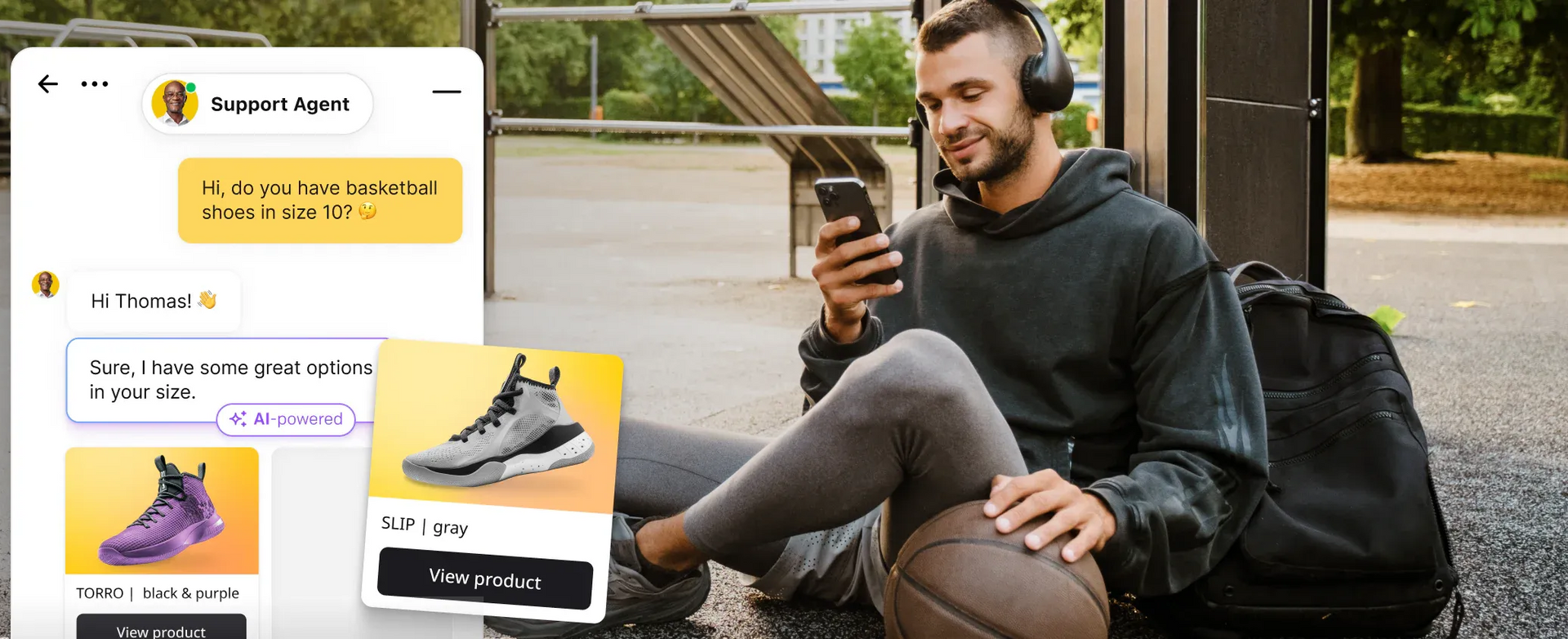
Quick Answer
Live chat connects a website visitor with a human agent in real time, while a chatbot responds automatically using predefined rules or artificial intelligence.
Chatbots are well suited to FAQs, qualification, routing, and after-hours support. Live chat is better for complex questions, sales conversations, troubleshooting, and situations where a human response adds value.
What Is LiveChat?
LiveChat is a real-time messaging tool that allows website visitors to communicate directly with a person from a business. Instead of making a phone call, sending an email, or submitting a contact form and waiting for a response, the visitor can start a conversation while they are still browsing the website.
Businesses commonly use live chat software for:
- Answering sales questions
- Providing customer support
- Recommending products or services
- Helping customers make purchasing decisions
- Qualifying potential leads
- Troubleshooting problems
- Directing visitors to the right information
LiveChat is particularly valuable when there is not one simple answer to a customer's question. A shopper comparing two products, for example, may need someone to understand their requirements before recommending the right option. A potential customer considering an expensive service may have questions about pricing, implementation, contracts, or compatibility.
These are situations where a human conversation can provide context that basic automation may struggle to replicate. LiveChat also provides routing features that can automatically direct conversations to specific teams based on factors such as the page a visitor is viewing or their location.
What Is a Chat Bot?
A chatbot is software designed to automatically communicate with customers through text-based conversations. Traditional chatbots generally follow predetermined rules or conversation paths. A visitor selects an option or asks a recognized question, and the bot provides a predefined response.
Modern AI chatbots can be much more flexible. They can interpret natural-language questions, use connected knowledge sources, collect customer information, recommend products, and determine when to escalate a conversation.
Common chatbot tasks include:
- Answering frequently asked questions
- Collecting customer information
- Performing initial lead qualification
- Routing conversations
- Handling repetitive support questions
- Providing after-hours assistance
- Helping customers find products or information
LiveChat can also integrate with ChatBot, allowing automated conversations to be transferred to human agents when necessary. That handoff is important. The most useful role for a chatbot is often not replacing human customer service entirely. It handles the simple parts of the conversation so employees can focus on the interactions where they provide the most value.
LiveChat vs. ChatBot: Key Differences


Who responds?
Human agent
Automated system or AI
Availability
Depends on agent availability
Can operate 24/7
Complex questions
Strong
Depends on the ChatBot and available information
Personalization
Highly adaptable
Based on available data, rules, and AI capabilities
Scalability
Limited by staffing
Can handle large volumes simultaneously
Escalation
Agent handles the conversation directly
Can transfer complex conversations to an agent
Best use
Complex sales and support conversations
Repetitive questions, qualification, routing, and initial support
The decision should therefore be less about choosing the "better" technology and more about determining what type of conversation your customers are trying to have.
When Is Live Chat Better Than a Chatbot?
Live chat is generally the better option when a conversation requires interpretation rather than simply retrieving information.
High-Value Purchases
The more money or commitment involved in a purchase, the more likely customers are to have specific questions before making a decision. A human agent can understand the customer's situation, ask follow-up questions, address objections, and recommend an appropriate solution.
Complex Questions
Some questions cannot be answered accurately without understanding additional context. A live agent can ask questions, investigate the issue, and adapt the response as new information becomes available.
Upset Customers
Customers dealing with a frustrating problem may not want to continue navigating automated prompts. A human agent can recognize frustration, acknowledge the situation, and adjust the conversation accordingly.
Technical Troubleshooting
Simple troubleshooting instructions can often be automated. More complicated technical issues may require an agent to work through the problem with the customer step by step.
Situations Requiring Judgment or Empathy
Refund disputes, unusual requests, account problems, high-value sales opportunities, and sensitive customer conversations may require judgment that should not be left entirely to automation.
When Is a Chatbot Better?
Chatbots are particularly effective when speed, availability, and scale matter more than human interpretation.
Repetitive Questions
If agents repeatedly answer questions such as:
- What are your hours?
- Where do you ship?
- What is your return policy?
- How do I reset my password?
- Where is my order?
Those conversations may be good candidates for automation.
24/7 Coverage
Customers do not always visit websites during business hours. A chatbot can provide immediate assistance, collect information, or begin the conversation when human agents are offline.
High Chat Volumes
A chatbot can simultaneously handle many routine conversations without creating a queue for human representatives.
Initial Qualification
A chatbot can ask basic questions before sending a potential customer to sales. For example, it might collect information about company size, location, requirements, budget, or the product the visitor is interested in.
Basic Routing
Automation can determine why someone is contacting the company and connect them with the appropriate team. Instead of every conversation entering the same queue, sales questions can go to sales, billing questions to billing, and technical issues to customer support.
Do You Need Live Chat, a Chatbot, or Both?
The right setup depends heavily on the business.
Small Service Business
A small professional or service business may benefit most from live chat supported by basic automation. A chatbot can collect contact information when nobody is available, while higher-value inquiries can be transferred to a person.
eCommerce Store
eCommerce businesses often benefit from both. Automation can handle shipping, returns, order status, and common product questions. Human agents can help with product comparisons, recommendations, larger purchases, or customers having trouble completing an order.
SaaS Company or Business With a Support Team
A chatbot can resolve repetitive questions and collect details about an issue before the conversation reaches support. Human agents can then concentrate on technical troubleshooting, account-specific questions, and more complicated requests.
High-Volume Enterprise Website
At larger volumes, automation becomes increasingly useful for filtering and managing conversations. The chatbot can handle common questions, identify intent, collect information, and route the visitor. Human representatives then handle conversations that require expertise or judgment.
How AI Is Changing Live Chat
The distinction between chatbot vs. live agent is becoming less rigid because AI can now support the human side of a conversation as well. AI does not have to be the customer-facing chatbot.
It can work behind the scenes to help live chat agents respond more efficiently. Current LiveChat AI capabilities include tools to automatically answer common questions and assist human agents with features such as suggested replies and conversation summaries.
AI can support customer service chat through:
Suggested Responses
AI can use approved company information to suggest answers while an agent is talking with a customer. The agent remains responsible for the conversation but does not have to repeatedly search for the same information.
Conversation Summaries
Long conversations can be summarized so another employee can quickly understand what has already happened. This can make transfers and follow-up conversations easier.
Intent Detection
AI can help identify why someone is starting a conversation and what they are trying to accomplish.
Intelligent Routing
Once intent is understood, the conversation can be sent to the department or employee most likely to resolve it.
Agent Assistance
AI can help employees retrieve information and formulate responses without requiring customers to communicate exclusively with a bot. This creates a middle ground between fully manual live chat and fully automated customer service.
How to Choose the Right Setup for Your Business
Before deciding between live chat, a chatbot, or a combination of both, look at the conversations your business is already having.
Consider these factors:

Website Traffic
More traffic generally creates more potential conversations. High-volume websites may need automation simply to make the number of inquiries manageable.
Chat Volume
If hundreds of conversations involve the same five questions, automation may provide significant value. If you receive fewer conversations but each represents a valuable sales opportunity, human live chat may matter more.
Types of Customer Questions
Review existing emails, phone calls, support tickets, and chat transcripts.
Separate questions into two groups:
- Predictable questions: suitable for automation.
- Complex or situational questions: better suited to humans.
Average Transaction Value
As the value and complexity of a purchase increase, customers may benefit more from access to knowledgeable representatives.
Support Hours
If customers frequently visit outside your team's working hours, automated chat can provide an initial level of service without requiring around-the-clock staffing.
Team Size
Smaller teams may use automation to handle repetitive requests. Larger teams can combine chatbots with routing rules so that customers reach the appropriate specialist more quickly.
Live Chat and Chatbots Work Best When They Have Different Jobs
The live chat vs. chatbot decision does not have to be an either-or choice. Chatbots are useful for speed, scale, qualification, routing, and repetitive questions. Human live chat agents are valuable when a conversation becomes complicated, valuable, sensitive, or unpredictable.
A strong customer service system can combine the two:
Chatbot handles the routine conversation
customer needs additional help
conversation is transferred
human agent receives the context and continues from there.
LiveChat's AI positioning follows a hybrid approach, with automation handling common interactions while AI-assisted tools help human agents handle more complex conversations. Ultimately, you should give customers the fastest useful answer while making it easy to reach a person when human expertise adds value.
Frequently Asked Questions
Is live chat the same as a chatbot?
No. Live chat normally refers to real-time messaging between a website visitor and a human agent. A chatbot responds automatically using predetermined workflows or artificial intelligence.
Can a chatbot transfer a customer to a human?
Yes. Many modern chatbot systems can escalate a conversation to a live agent when the bot cannot resolve the customer's request. LiveChat's ChatBot integration, for example, supports transfers between bots and human agents.
Is live chat better for sales?
Live chat can be especially valuable for complex or high-value sales because a human representative can ask questions, understand the customer's needs, address objections, and provide personalized recommendations. A chatbot can still play an important role by identifying and qualifying sales opportunities before an agent becomes involved.
Can AI replace live chat agents?
AI can automate many repetitive customer service tasks, but it does not eliminate the value of human agents. Complex troubleshooting, unusual situations, sensitive conversations, negotiations, and cases requiring judgment are often better handled by a person. LiveChat itself positions AI as both an automation tool and an assistant that helps human agents handle conversations more efficiently.
Can businesses use live chat and a chatbot together?
Yes. In many cases, using both creates the most practical setup. A chatbot can answer routine questions, collect information, and determine what a customer needs. A live agent can then take over when the conversation requires more detailed help, judgment, or personalized assistance.
Recent Posts